“from Ethiop” search results (56821)
![Ethiopian peach coffee [Nekisse N2 L12 Ethiopia]](https://www.coffeesearch.net/uploads/allimg/150902/160SU928-0-lp.jpg)
Ethiopian peach coffee [Nekisse N2 L12 Ethiopia]
Nekisse N2 L12 Ethiopia named the coffee after Nectar from Shakisso in 2009, meaning it has the same flavor as nectar from the town of Shachiso in Hidamo province, Ethiopia. Nekisse is characterized by a creamy and smooth taste, a strong berry sauce, and some batches even have mixed flavors of citrus and a variety of tropical fruits. Although at first,
2015-09-02 Ethiopia peaches coffee Nekisse L12 Ethiop
Ninety Plus Nekisse N2 L12 Ethiopia, stunning peach-flavored Sidamo producing area.
Originally named as Nectar from Shakisso in 2009, the Nekisse profile is defined by creamy mouthfeel and heavy berry jam flavor, but layers of citrus and many tropical fruits can be present in some selections. Originally from Shakisso, sub
2016-07-22 Ninety Plus Nekisse L12 Ethiop
Ninety Plus Nekisse N2 L12 Ethiopia, amazing peach flavor Wellega and Si
Origin of the name: in 2009, the coffee was named after Nectar from Shakisso, meaning it has the same flavor as nectar from the town of Shachiso in Hidamo province, Ethiopia. Nekisse is characterized by a creamy and smooth taste, a strong berry sauce, and some batches even have mixed flavors of citrus and a variety of tropical fruits. Although it was originally produced in Shakisso
2016-07-14 Ninety Plus Nekisse L12 Ethiop
Boutique coffee recommends premium mocha coffee
◆ Origin: Ethiopia Ethiopia ◆ baking method: City Roast ◆ characteristics: 1. Palate: slightly sweet with soft acidity, sweetness has its unique round ripe taste and its unique sweetness, sour and bitter taste is extremely elegant. two。 Bouquet: intense aromas of fruit and grass. 3. Vision: the bean granule is small and the bean color is uneven. Ethiopia, known as the birthplace of coffee, has
2014-12-20 Boutique Coffee recommendation Super Mocha Origin Ethiopia Ethiop
The coffee tree originated in Ethiopia.
The coffee tree originated in Ethiopia, which was originally a wild plant here, and the name coffee comes from the Ethiopian town of Kaffa. In fact, many coffee trees in Ethiopia are still wild plants, and the coffee grown on this coffee tree is full-grained and slightly alcoholic. Humans may have known how to grow coffee trees as early as the 9th century, but
2016-05-24 Coffee from Ethiopia coffee Ethiop
Ethiopian coffee trees originated in Ethiopia
The Ethiopian coffee tree originated in Ethiopia (Ethiopia). It was originally a wild plant here, and the name coffee comes from the Ethiopian town of Kaffa. Humans may have known how to grow coffee trees as early as the 9th century. Coffee producing area in Ethiopia: many coffee trees in Ethiopia are still wild plants, the coffee that grows on this coffee tree.
2015-10-07 Ethiopia coffee from Ethiopia from EthiopThe origin of coffee
Legend has it that three thousand years ago, shepherds and monks in the mountains of Ethiopia were excited to find that their sheep had eaten unknown fruits and leaves. They were initially regarded as medicines to treat mild headaches and diarrhea, and it was not until the fifteenth and sixteenth centuries that they evolved into the present method of drinking among Arabs. Second, spread and promote A. Coffee is the earliest.
2014-08-22 Coffee origin discovery legend three thousand years ago Yesso Pia Ethiop
Coffee from heaven comes from coffee from heaven.
Coffee from heaven. It would be a privilege to have Tahiti coffee, because it is extremely rare. The trade name of Tahiti coffee is Tahiti. Arabica coffee (Tahiti Arabica). Any coffee exported from Tahiti, the largest of the Social Islands (Society Islands), can be said to be highly unusual. Such as
2014-12-25 From Heaven Coffee from Runeng Hiti Tahiti
Yemeni coffee comes from coffee beans from the hometown of coffee.
Mocha beans are smaller and rounder than most coffee beans, which makes mocha beans look like peas. In fact, bean-shaped berry coffee beans (Peaberrybean) are sometimes called mocha beans. The shape of mocha coffee beans is similar to that of Ethiopia's Harrar coffee beans.
2016-05-18 Yemen coffee from hometown coffee beans
Coffee from Panama Good coffee from US dollars Fine coffee from Mount Baru Volcanic soil
Specialty coffee is also known as specialty coffee. It refers to coffee made from green beans with excellent taste characteristics grown in a few extremely ideal geographical environments. Depending on the particular soil and climatic conditions in which they are grown, they have outstanding flavors. This type of coffee is carefully selected and graded for its hard texture, rich taste and wind.
2016-06-23 Panama Coffee USD Lushan Volcano Soil Fine sp
Matsuya method, a hand-flushing method derived from Japan
The Matsuya method also comes from Japan, which was invented to extract only the delicious ingredients from the coffee. Use a spoon to dig a big hole in the coffee powder, about 30cm from the noodle, pour water from the middle until the coffee liquid begins to drip, then draw a circle like a circle to wet the coffee powder and cover it with steaming. After 3 minutes, it begins to be uniform.
2016-06-01 From Japan Hechong method Matsuya also from Japan
2015SCAA, the top ten coffee artifacts at the exhibition
Original text from: I Drank 10 Coffees At SCAA And Wrote About It For Sprudge author: Charlie Burt just passed the 2015 Seattle SCAA show, Charlie Burt, a journalist from Kansas, USA, drank almost all the coffee at the show, which is not easy. Charlie tasted 10 cups in a few hours with different utensils.
2015-10-17 2015SCAA meeting Top Ten Coffee artifact original from Dra
Venezuela's distinctive manor coffee comes from this oil-rich country.
The distinctive manor coffee comes from this oil-rich country. Oil was once considered to be the main export of Venezuela. Although coffee trees were introduced from Martinique in 1730 and Venezuela, coffee production was almost abandoned at the height of the oil industry. Recently, coffee plantations have begun to recover, with the original planting of Tipica and
2016-05-17 Venezuela very unique manor coffee from this oil the country
Coffee from Guangzhou Coffee Expo to Coffee Expo
The 2014 Guangzhou Coffee Expo will be held on December 11-14 at Yiwu Pavilion, Zhongzhou Center, Pazhou, Guangzhou, including 11-12 professional audience days and 13-14 public open days. It is reported that this year's Guangzhou Coffee Expo covers an area of nearly 10000 square meters, including Yega Snow Coffee from Ethiopia, Blue Mountain Coffee from Jamaica, Rose Summer Coffee from Panama and cat shit coffee from Indonesia.
2014-12-09 Guangzhou Coffee Expo 2014 will be held in 12.
Coffee from Rwanda comes from washed Arabica coffee beans.
From washed Arabica coffee beans, the coffee has a unique and perfect flavor. Rwanda coffee is absolutely high quality in the form of washed Arabica beans. As far as Africa is concerned, its coffee industry attracts attention because the country thrives mainly by producing the best possible coffee beans. The taste of Rwandan coffee is described as a grassy aroma with tropical climate characteristics.
2015-10-17 Coffee origin Rwanda from wash Arabian coffee beans
Matsuya method comes from Japanese hand flushing method
The Matsuya method also comes from Japan, which was invented to extract only the delicious ingredients from the coffee. Use a spoon to dig a big hole in the coffee powder, about 30cm from the noodle, pour water from the middle until the coffee liquid begins to drip, then draw a circle like a circle to wet the coffee powder and cover it with steaming. After 3 minutes, it begins to be uniform.
2016-06-14 Matsuya from Japan hand Chong method way also source
Matsuya method also comes from Japanese hand flushing method.
The Matsuya method also comes from Japan, which was invented to extract only the delicious ingredients from the coffee. Use a spoon to dig a big hole in the coffee powder, about 30cm from the noodle, pour water from the middle until the coffee liquid begins to drip, then draw a circle like a circle to wet the coffee powder and cover it with steaming. After 3 minutes, it begins to be uniform.
2016-06-07 Matsuya also comes from Japan Hechong method too.
Vietnam is the largest importer of coffee from China.
Vietnam and Malaysia have been the main sources of coffee imported from China since 2002, the Viet Cong Electronic News reported on September 25. Vietnamese coffee accounts for 90% of China's total coffee imports from ASEAN countries. According to Vietnamese customs statistics, China imported 137000 tons of coffee between 2007 and 2011. Of this total, 103900 tons were imported from Vietnam, with the import value reaching 195 million US dollars, accounting for China's total.
2016-04-13 Vietnam China Coffee Import Big country Viet Cong Electronic News September 25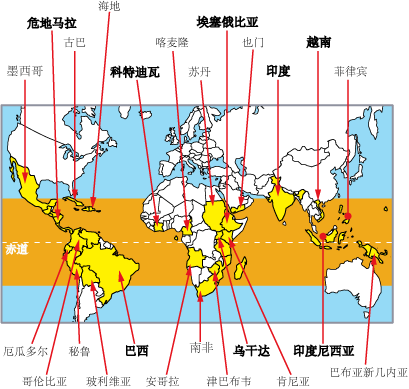
Latin American coffee the most distinctive manor coffee comes from the oil-rich country Neri
Venezuela's distinctive manor coffee comes from this oil-rich country. Oil was once considered to be the main export of Venezuela. Although coffee trees were introduced from Martinique in 1730 and Venezuela, coffee production was almost abandoned at the height of the oil industry. Recently, the coffee plantation has begun to recover, and the original Tippica (T
2016-04-07 Latin America coffee very special manor from this oil-bearing country
Introduction of Indonesia Manning Coffee Bean Fine Coffee introduction to Manor producing area
Diseases and insect pests caused by torrential rains in 2oo6 reduced coffee production in India by 4.09% to 288000 tons, less than the 300000 tons after 2oo6/2oo7 's annual flowering. According to expert analysis, heavy rain and coffee diseases such as stem rot and black rot have reduced coffee production, while the yield of small seed coffee may be reduced from 10.37 million tons to 99700 tons after heavy rain, while the yield of medium grain coffee is lower than that predicted after flowering.
2016-07-25 Nieman Tenin coffee beans boutique coffee introduction manor flavor taste